
How to Get Rid of Flying Termites
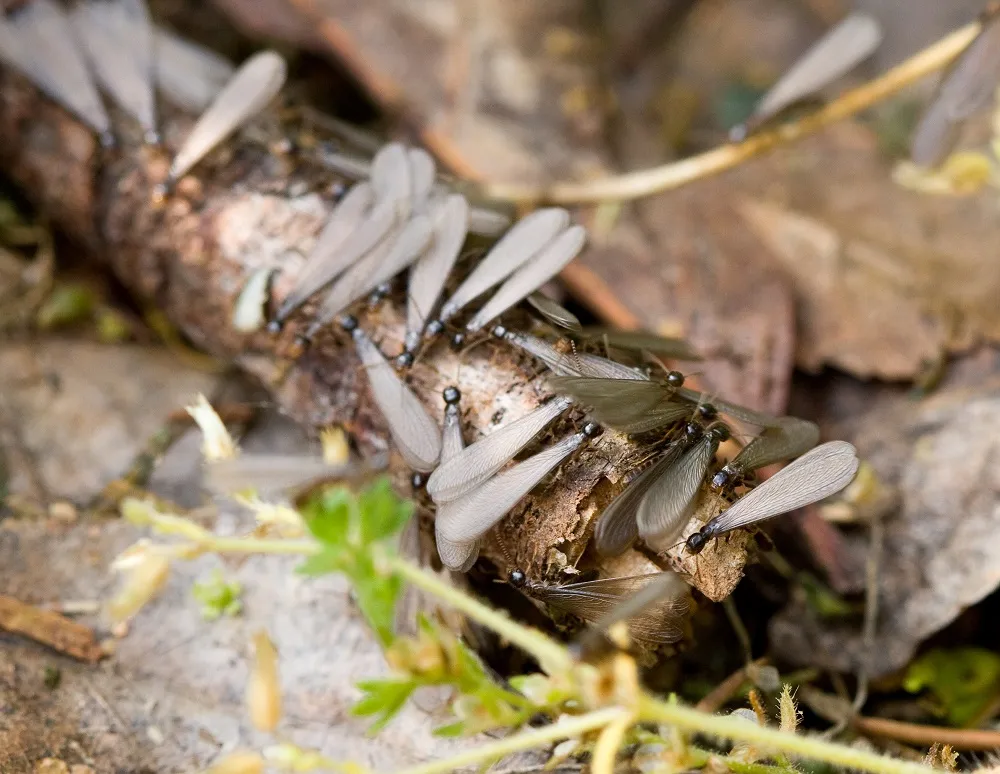
As a Pennsylvania homeowner, seeing flying termites near your windows, doors, or light fixtures is one of the most alarming things you can discover, and for good reason. These winged insects, known as alates or swarmers, aren’t random visitors. Their presence almost always signals that a mature termite colony is already established on or near your property, ready to expand.
The good news: acting quickly dramatically limits the damage. In this guide, our experts will outline how to identify, prevent, and remove flying termites with professional termite control in PA.
Table of Contents
What Flying Termites Actually Mean for Your Home
This is the part most homeowners don't realize: flying termites themselves don't damage wood. However, their presence is a serious warning signal that something much bigger is happening nearby.
Termite colonies take three to five years to mature fully. Once they do, they produce swarmers, or the reproductives whose job is to fly out, find a mate, and start entirely new colonies. If you're seeing them inside your home, it means a colony has been active on or in your property for years, likely without any visible signs until now.
A single swarm can release tens of thousands of alates at once. While only around 10% successfully establish new colonies, the math is sobering: a handful of successful pairs can mean several new infestations starting simultaneously around your home or property.
In short, flying termites aren’t the problem; they're the announcement that the problem has grown large enough to spread.
10 Signs You Already Have a Termite Infestation
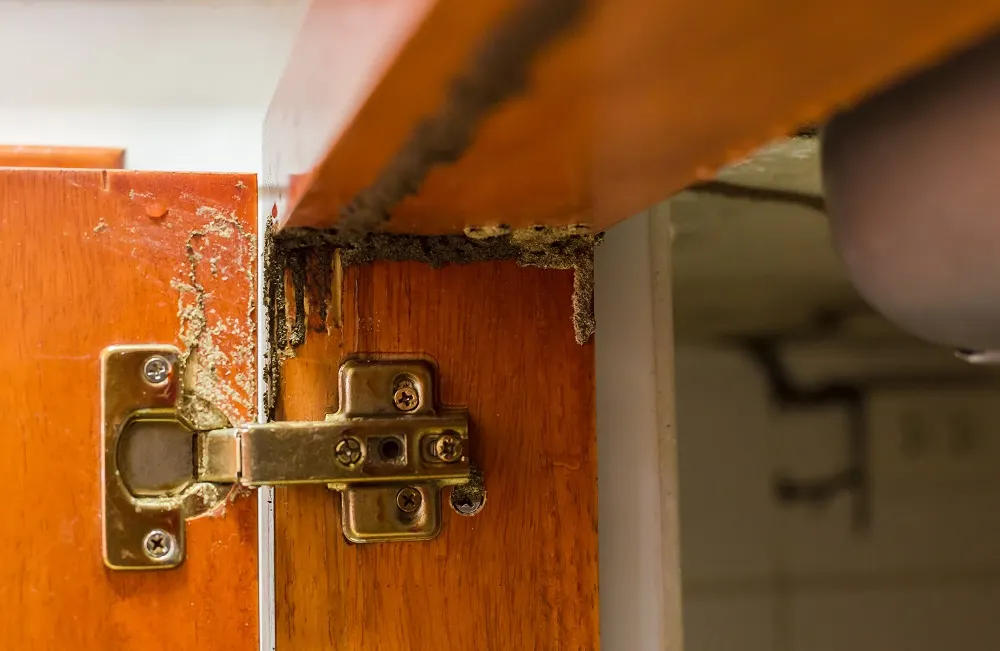
Flying termites rarely appear out of nowhere. In most cases, earlier warning signs went unnoticed. Look for:
- Mud tubes along your foundation, basement walls, or crawl space — the underground highways subterranean termites use to travel;
- Hollow-sounding wood when tapped — termites eat from the inside out, leaving a thin shell;
- Discarded wings on windowsills, near doors, or around light fixtures after a swarm;
- Frass — small, pellet-shaped droppings left by drywood termites near infested wood;
- Stuck doors and windows caused by warping wood framing;
- Squeaky or shifting floorboards with no obvious cause;
- Peeling paint that resembles water damage but has no moisture source;
- Drywall discoloration or maze-like patterns just beneath the surface;
- Crumbling or damaged wood that feels soft or brittle;
- Holes in drywall or lifting tiles near wooden subfloors.
If any of these sound familiar, a professional inspection is the right next step instead of using a DIY spray.
Professional Termite Removal: How It Works

To eliminate flying termites reliably, you’ll need to eliminate the source colony. Spraying swarmers on the surface isn’t effective in addressing the colony underneath. Here's how licensed professionals handle it:
- Thorough inspection. Technicians examine attics, crawl spaces, basements, wall voids, and foundations, not just the areas where swarmers were spotted. The goal is to locate exit holes, mud tubes, and the colony itself.
- Species identification. Subterranean termites (the most common in PA) and drywood termites require different treatments. Correctly identifying the species before treatment is essential.
- Targeted treatment application. Depending on the species and severity, professionals use liquid termiticides injected into walls and soil, in-ground bait stations, or fumigation for drywood infestations. Commercial-grade products penetrate areas that retail sprays can’t reach.
- Swarmer removal. Active swarmers are cleared via controlled sprays, vacuums, or sticky traps placed at windows and entry points.
- Follow-up monitoring. Termite colonies can persist, which is why a reputable company schedules follow-up inspections 30–90 days after treatment and may install bait stations for ongoing monitoring.
DIY Methods: What Helps and What Doesn't
It's tempting to reach for a hardware store solution when you see a swarm. Some measures can reduce visible activity in the short term:
- Sticky traps near windows and doors catch swarmers before they settle.
- Vacuuming indoor swarms removes visible insects quickly.
- Boric acid or orange oil can affect minor drywood infestations in localized areas.
- Sealing cracks around doors, windows, and your foundation blocks entry points.
However, none of these approaches reaches the source colony. Subterranean termite queens can live deep underground for up to 10 years, well beyond the reach of any surface spray. For anything beyond a very early, localized infestation, professional treatment is the only reliable way to fully eliminate the problem, rather than simply masking it.
How to Prevent Flying Termites from Returning

When treatment is over, prevention is key to reducing the risk of future swarms. According to the EPA, several environmental factors make properties significantly more attractive to termites — and most are within a homeowner's control:
- Reduce moisture. Fix leaking pipes, poor drainage, and damp crawl spaces. Termites are strongly drawn to humid environments.
- Eliminate wood-to-soil contact. Keep wood siding, door frames, and structural elements at least six inches above ground level.
- Manage exterior lighting. Flying termites are attracted to light. During swarming season (typically spring through early summer in PA), turn off outdoor lights at night or switch to yellow bulbs that are less attractive to insects.
- Clear debris. Remove mulch, firewood, and leaf piles from the perimeter of your foundation.
- Ventilate crawl spaces. Improved airflow reduces the humidity that termites seek out.
- Schedule annual inspections. A professional check once a year catches new activity before it becomes a full infestation.
How Much Do Flying Termite Treatments Cost in Pennsylvania?
Termite treatment costs depend on the species, property size, and the level of infestation. Here's a realistic 2026 estimate for the most common methods used in PA:
Prices typically include labor, materials, and at least one follow-up inspection. Many companies also offer re-treatment guarantees, so if termites return within a specified period, they come back at no additional charge.
Flying Termites vs. Flying Ants: How to Tell the Difference
Before doing anything else, it's worth confirming you're actually dealing with termites. Flying ants and flying termites look similar enough to confuse, and the distinction matters because they require completely different responses.
Here's how to tell them apart:
If you're unsure, capture one of the insects or a discarded wing in a zip-lock bag. A pest control technician can identify the species instantly and recommend the right course of action. For official identification guidance, see the USDA Forest Service termite resources.
Protect Your Property from Flying Termites
Pest Control Technicians, Inc. identifies infestations, removes swarms, and implements long-term prevention for peace of mind. Call us today to keep termites out of your home or business.

Pest Control Technicians, Inc. Protects PA Homes from Flying Termites
Flying termites are a sign that time isn’t on your side, and Pest Control Technicians, Inc. is ready to act fast. Family-owned and serving Pennsylvania since 1976, our certified technicians inspect, treat, and monitor for termite activity across Montgomery, Bucks, Chester, Delaware, and Berks counties. Contact us today for a free inspection and stop the spread before it becomes a costly structural problem.
FAQs
Are flying termites dangerous to people?
Termites don't bite or sting and are not known to spread disease. The danger is more structural — to your home, not your health. But the financial risk is serious, which is why early action matters.
When do termites swarm in Pennsylvania?
Subterranean termites in PA typically swarm in spring, from March through May, often after rain on a warm day. Some species swarm in early summer. If you see a swarm indoors, that's a stronger signal than an outdoor swarm; it usually means the colony is inside the structure.
How long do flying termites live?
The swarmers themselves typically live only a few hours to a few days if they don't find a suitable location to establish a colony. However, if a pair successfully mates and settles, they can live for years. For context, the queen of a subterranean colony can survive up to 10 years.
Can I just wait for the swarm to pass?
You can vacuum up the swarmers and wait for the visible activity to stop — it usually does within an hour or two. However, you aren’t addressing the root of the problem, as the colony causing the swarm doesn't go anywhere. Waiting only gives termites more time to expand and cause further structural damage.
Do I need to leave my home during treatment?
For liquid barrier and bait station treatments, no, there's no need to vacate. Fumigation (used primarily for drywood termites) does require residents and pets to leave for 24–72 hours. Your technician will tell you exactly what to expect before any work begins.