
How Far Do European Hornets Travel from Their Nest?
If you live in Pennsylvania and have spotted some oversized buzzing insects around your yard, chances are you’ve crossed paths with European hornets. These hornets are unlike the smaller wasps you might swat away at a picnic. Instead, they’re social wasps that are typically one inch long, and known for their large size and striking yellow and brown coloring. But how far can they travel from their nest, and should you be calling hornet pest control if you see them? Rest assured, the team at Pest Control Technicians, Inc. will outline everything you need to know to stay safe.
Table of Contents
How Far Do European Hornets Travel?

European hornets typically travel 300 to 1,000 feet from their nest to forage. That means if you see them buzzing around your garden, there’s a good chance their nest is tucked away nearby — in a hollow tree, under the bark, in attics, or even in the ground. Unlike flies or bees that may roam farther, hornets stick fairly close to home because they’re constantly bringing food back to the colony for survival.
In Pennsylvania, where trees, orchards, and suburban yards provide perfect foraging spots, it’s not uncommon to see hornets drawn to fallen fruit, tree sap, or other insects. Their travel distance is short but consistent, so if a food source is close, they may become persistent visitors.
How to Identify European Hornets
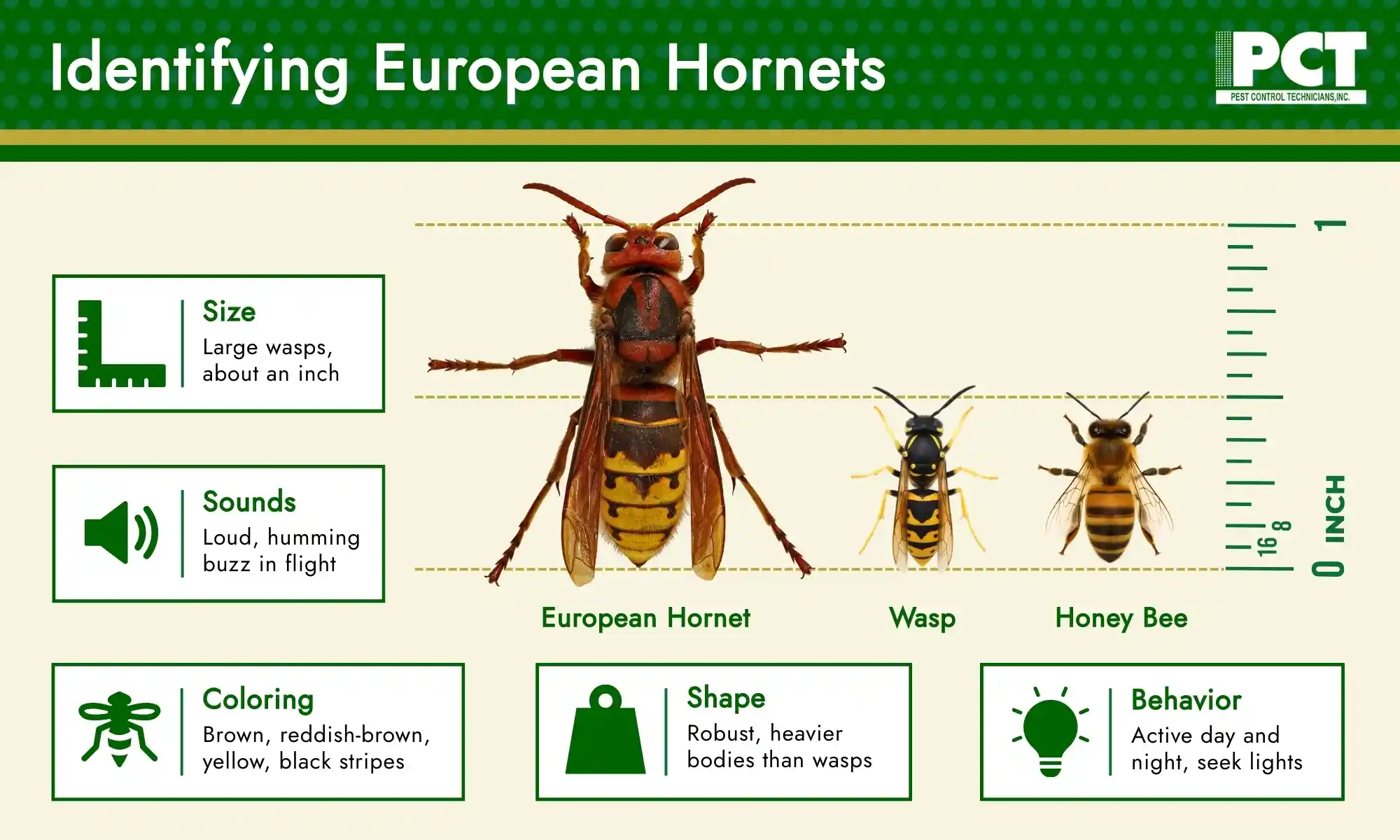
European hornets (Vespa crabro) are the only true hornet species established in the United States. They stand out for several reasons:
- Size: European hornets are large social wasps, usually about an inch long, making them noticeably bigger than yellow jackets and paper wasps.
- Coloring: They have a mix of brown and reddish-brown on their head and thorax, with yellow and black striped abdomens. This brown-and-yellow pattern often confuses people into thinking they’re giant yellow jackets.
- Shape: Their bodies are more robust and heavier-looking compared to slimmer wasps.
- Behavior: They fly both during the day and at night, often buzzing around outdoor lights, which is unusual for many insects.
- Sounds: When in flight, European hornets make a loud, almost humming buzz that makes them hard to miss.
If you notice inch-long wasps hovering near trees, chewing bark for sap, or buzzing around fallen fruit in late summer, chances are you’re looking at European hornets. But do you need to take action?
Are European Hornets Dangerous?

Because of their large size and ability to sting multiple times, European hornets can be intimidating. Their smooth stingers make them capable of stinging repeatedly, unlike honeybees, which die after one sting.
Generally, hornets won’t attack unless they feel threatened or if you get too close to a nest. However, even mowing the lawn near a hidden ground nest or trimming branches near a tree cavity can make them swarm quickly. Hornet stings are painful, can swell and itch for 24 hours, and for people allergic to insect venom, they can be dangerous.
Why Do They Leave the Nest?
Hornets don’t leave their nest for fun; they’re on a mission to find food. Worker hornets forage, scouting areas with:
- Fallen fruit: Rotting apples, pears, or peaches are irresistible.
- Tree sap: They’ll chew into bark to drink it.
- Insects: Hornets are predators that capture flies, wasps, and other insects.
- Human leftovers: Uncovered trash or outdoor food can attract them.
Every trip away from the nest is about survival, like feeding their young, keeping the queen strong, and maintaining the colony.
When Are Hornets Most Active?
European hornets follow a seasonal pattern:
- Spring: Queens emerge from hibernation and start new nests. While early hornet activity is limited, it grows as workers are born.
- Summer: Colonies expand, and hornets become more visible as they forage aggressively.
- Fall: Activity peaks. This is when you’re most likely to notice them going after fruit, sap, and insects.
- Winter: Most hornets die off, leaving only queens to survive and restart the cycle.
So, if you’re seeing a sudden spike in hornet traffic in September, it’s not your imagination — it’s peak hornet season.
How to Locate a European Hornet Nest in Pennsylvania

European hornet nests can be tricky to find, but we’ve outlined some common spots:
- Hollow trees along the woodlines
- Under bark on larger trees
- Inside wall voids, sheds, or attics
- In the ground, often hidden in brush
Because Pennsylvania has plenty of wooded areas mixed with residential neighborhoods, hornets easily adapt, nesting in both rural and suburban settings. If you’ve seen steady hornet activity, chances are their nest is nearby.
What Should You Do If You Find a Hornet Nest?

These insects defend their colonies aggressively, and removing an active nest isn’t a good idea; it puts you at greater risk of getting stung multiple times. Instead, keep your distance, avoid areas with visible activity, and call a professional. They are active day and night, so calling the professionals is the best decision you can make to keep you and your family safe.
DIY Attempts
Some homeowners try DIY hornet control, especially if the nest is small and away from heavy foot traffic. If you’re tempted, it’s important to know the risks and limitations. The safest time for DIY action is at night when hornets are less active, and you should always wear protective clothing. Here are some common methods:
- Spraying insecticide directly into the nest entrance
- Applying insecticide dust to cracks where hornets are entering
- Sealing small entry points around your home to block future nesting
Cons of DIY:
- High risk of stings and allergic reactions
- Difficult to reach nests in trees, walls, or attics
- May only kill foragers, not the queen
- Often, a temporary fix instead of a long-term solution
Why not remove the risk and the stress from the process? Pest control professionals are trained to safely handle any kind of stinging insect, including hornet infestations. Whether the nest is in a tree, under your siding, or up in the attic, they have the tools and know-how to remove it without putting your family at risk.

Keep Your Home Pest-Free All Year!
All Seasons will eliminate all current infestations and protect your home against household pests for the long haul. Our Residential Service program is a subscription service with quarterly treatment that also provides service throughout the year whenever you’re having an issue.

Reclaim Your Yard with Professional Help from PCT
European hornets may only travel a few hundred feet from their nest, but that’s more than enough to make your backyard uncomfortable. If you’re tired of dodging these inch-long insects or worried about painful stings, don’t wait until the problem grows.
At Pest Control Technicians, Inc., we provide safe, effective hornet control in Pennsylvania. From inspecting your property to removing nests and preventing future infestations, we’ll make sure your home or commercial property is hornet-free. We have over 45 years of experience and are always available to help when you need us.
Get a quote today and ensure your space is protected.
FAQs
How aggressive are European hornets?
European hornets are not usually aggressive unless their nest is disturbed. However, if they feel threatened, they can sting multiple times and defend their colony aggressively.
What do European hornets hate?
European hornets dislike strong scents such as peppermint oil, vinegar, and smoke. They’re also less active in cooler temperatures, which makes them easier to control.
What is a safe distance from a hornet’s nest?
We recommend staying at least 10–20 feet away from a European hornet nest. Getting closer can make the hornets feel threatened and trigger defensive stings.
Can a European hornet remember you?
Unlike Bald-faced hornets, European hornets don’t remember people’s faces. They won’t recognize you as an individual, but they will aggressively defend their nest if they feel threatened, stinging multiple times if necessary.
Do European hornets come back every year?
Yes, but not the same colony. Each fall, the workers and the old queen die. Only new queens survive winter by hibernating. In spring, those queens build new nests — sometimes in the same area, but they don’t reuse the old nest.